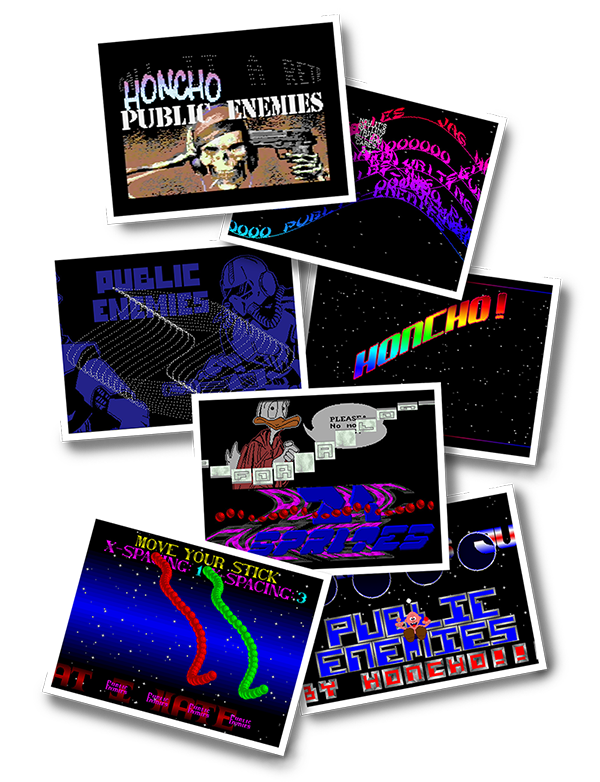
The Early Days
Every crew has an origin story, and ours starts in the countryside north of Stockholm, where both our families had summer houses in the same area. That’s the only reason we ever met: two boys from different parts of the city who happened to spend their summers on the same patch of gravel roads and pine trees. I was 9 when I met “Chuck C”, and it was the BMX bikes that did the introductions. They owned the sunny days, homemade ramps and long arguments about who had actually cleared them. But I’d be lying if I said we were outdoor kids. We spent far too many hours of those summers indoors as well, curtains pulled against the sunshine, two heads over one keyboard. The bikes and the computers ran side by side from the very beginning.
I’d started out on a ZX81 while Chuck C had his ZX Spectrum 48K, so to begin with we were just two Sinclair kids with nothing much to argue about. That changed the day I got a C64. Out in the wider world, Commodore against Sinclair was a proper playground war, but between us it was never anything more than banter: whose sprites were better, whose sound chip was better, whose machine was better full stop, all of it delivered with a grin and none of it meant. It gave us something to wind each other up about right until the day we ended up on the same side. Plenty of gaming got done in between.
But the place I remember best is the loft at Chuck C’s mum’s summer house. It was a literal crawl-in with the ceiling no more than 1m high, reached by a wooden ladder awkward enough that nobody else could be bothered, which is exactly why we spent so much time up there. Privacy, of a sort. That’s where Chuck C taught me the basics of programming. No, not that BASIC ;)

The Amiga Era
We’d been tinkering with code for years by this point, typing in listings, poking at things we didn’t understand, breaking more than we fixed. What changed in 1987 was the Amiga, and how badly we both wanted one. In the way stood a hefty price tag and a very sceptical dad.
Enter Chuck C, salesman. He “pitched” the machine to my father with the conviction of someone who had everything riding on the deal, which he did, because the moment my dad caved he turned straight around to his own mum with the killer argument: “Look, he’s getting one so can’t I have one too?”
Two Amigas later we set out to master the Motorola 68000, and more importantly the Blitter and the Copper, the custom chips that put the Amiga a head above the rivalling Atari ST. This is where tinkering turned into serious coding. The scene itself would take us another year to find, but it started here.

Forming the Crew
We’d grown up admiring the C64 demo groups, but it was the Amiga demos that made us want in properly. Not just to watch, but to believe we had something to contribute. We’d wanted that on the earlier machines too, honestly. We just didn’t know enough yet.
By 1988 we did, and that meant the first real challenge: a cool name. It took some debating. Eventually we landed on Public Enemies, a plural version of the legendary hip-hop group. I was already using Honcho, picked from an Agent X9 comics magazine years earlier, but with the new group name it isn’t hard to see where Chuck C comes from. The C was chosen so he’d come before Chuck D alphabetically ;)
The crew grew from there. A couple of computer-loving friends joined as Psychomaniac and Seargent Pepper. My game-trading habit paid off too: among the people I swapped floppy disks with was Zeus, an absolutely brilliant coder. It took some convincing, but in 1989 he and some of his friends came aboard, and that’s when we stopped being two mates with Amigas and became a proper crew.

Copy Parties & The Split
If you wanted to meet the scene, you went to a copy party. That was where friendships were made and coding tricks changed hands. The one that stays with me is the Phenomena and Censor party in Arboga in January 1990, where we released a couple of demos along with one of Chuck C’s best ever tunes. It went better than we dared hope: Zeus’s Vectors took second place in the Amiga demo compo, beaten only by Fairlight, and Mega Plots 3000 was later voted number four in Cracker Journal 19. For a crew of teenagers from the suburbs, finishing behind Fairlight and ahead of everyone else was as good as it ever got.
The best party I ever attended, though, wasn’t ours at all. It was the Halloween party in Haninge in November 1991, organised by the Atari crew 2-Life Crew together with the legendary TCB, whose AN Cool is a close friend of mine. Around 250 people in a school outside Stockholm, demos projected on the wall, everybody applauding when a program crashed and dropped bombs on screen. And me: as far as I could tell, the only Amiga person in the building. This was peak Atari against Amiga, the flame war years, and turning up on the wrong machine was asking for it. But I was there as a guest of TCB, and in that scene TCB’s word settled the matter. Nobody gave me any grief at all. It turns out the fastest way through a platform war is to know the right people on the other side of it.
By then Public Enemies was already over. In April 1990 some of us joined up with members of Top Swap to form a new group, Adept, and that was that. The others scattered into good places: Chuck C went on to co-found Shining that autumn and stayed through its merger into Dual Crew Shining, still listed as a member nearly a decade later. Zeus went to Shining too and kept doing what he did best, taking second place at the Anarchy Easter Conference in 1991 with Vector Exterminator, which was voted the ninth best demo of that year. After 1992 his name simply stops appearing anywhere, which is how a lot of these stories end.
Looking back I regret the split and wish we’d stuck together. Chuck C and I are still in touch after all these years, which I’m grateful for, but the rest of the crew I simply lost along the way, and those are the ones I think about. We were friends before we were a crew, and that’s the part I’d have kept.

The Revival
Then came 2020, a global pandemic, and a lot of time indoors. You know how this goes. Some people baked sourdough. I dug out a group name that had been gathering dust for 30 years, appointed myself the entire crew, and released a comeback demo.
In fairness it did have a twist: 30 Years was a C64 intro, our first ever, which is a strange way to relaunch an Amiga group. It came out on 11 April 2020, right in the middle of the first lockdown, and it was only ever meant to be a one-off bit of nostalgia.
That was six years ago and I have not stopped since. The nostalgia turned into a habit, the habit turned into something like a second scene career, and there are now 70 C64 releases with my name on them, code and pixel art both. I’ve since been part of Atlantis, and these days I’m with Pretzel Logic, a Swedish group that has been going since 1988. The same year we started Public Enemies. Some things you just come back to :)

The Demos
...or at least the ones we could find. There were a couple more, lost to the floppy graveyard!
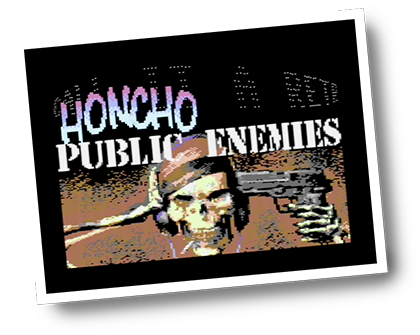
30 Years
The retro intro on the C64 rather than the Amiga 500!
C64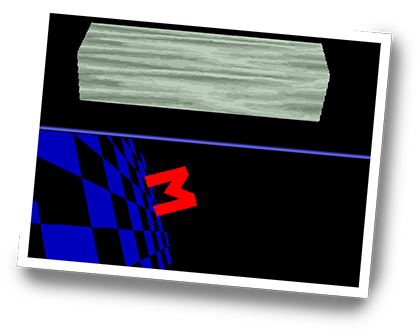
Vectors
Zeus showing off his blitter skills at the Phenomena party 1990.
Amiga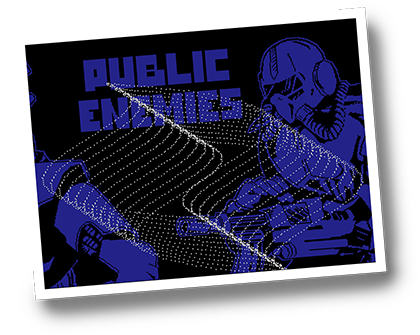
Megaplots 3000
Voted #4 in Cracker Journal 19. The Doz rocks!
Amiga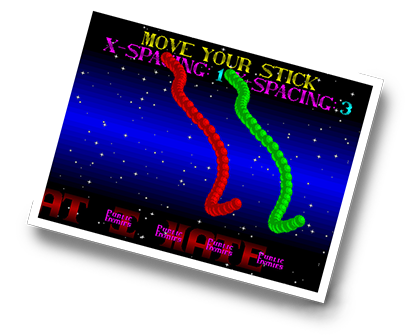
Hey Look
Zeus demo with its famous “flickering” blue rasterbar.
Amiga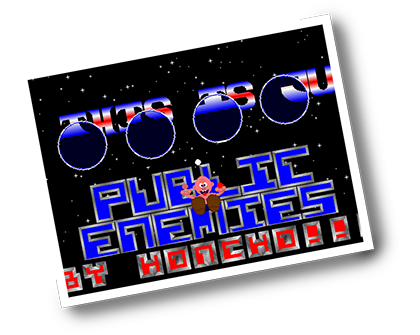
The Lens
Competition entry from Zeus. Chuck C on music.
Amiga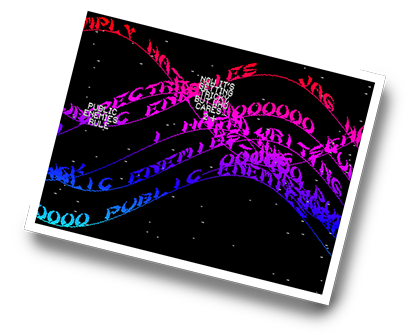
Dozen
A record breaker with its dozen sinus scrollers.
Amiga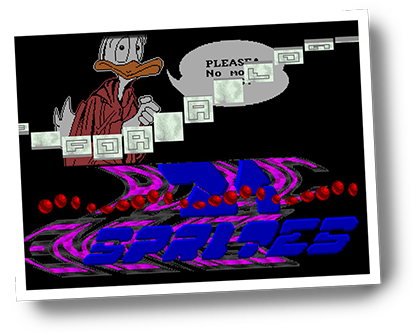
21 Sprites
Copy party entry with an animated scroller.
Amiga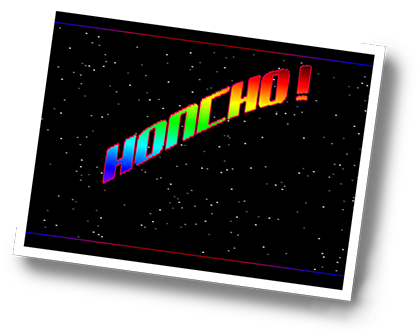
Another Intro
Early creation that ended up on a Tetragon compilation.
AmigaThe Retro Intro
It started with WinUAE and a laptop, getting back into assembler on the Amiga. I do still have my old Amiga 500 (v1.2, yes, that old), but it’s far easier to write the code in an emulator first and port it across to the real thing afterwards.
Then WinVICE pulled me further down memory lane. Revisiting old C64 games like The Way of the Exploding Fist and Last Ninja brought back so many good memories that I thought I’d give assembler coding a go on the little machine itself :)
The result: my first ever C64 intro, called 30 Years, marking three decades since the last Public Enemies demo.
Watch on YouTube